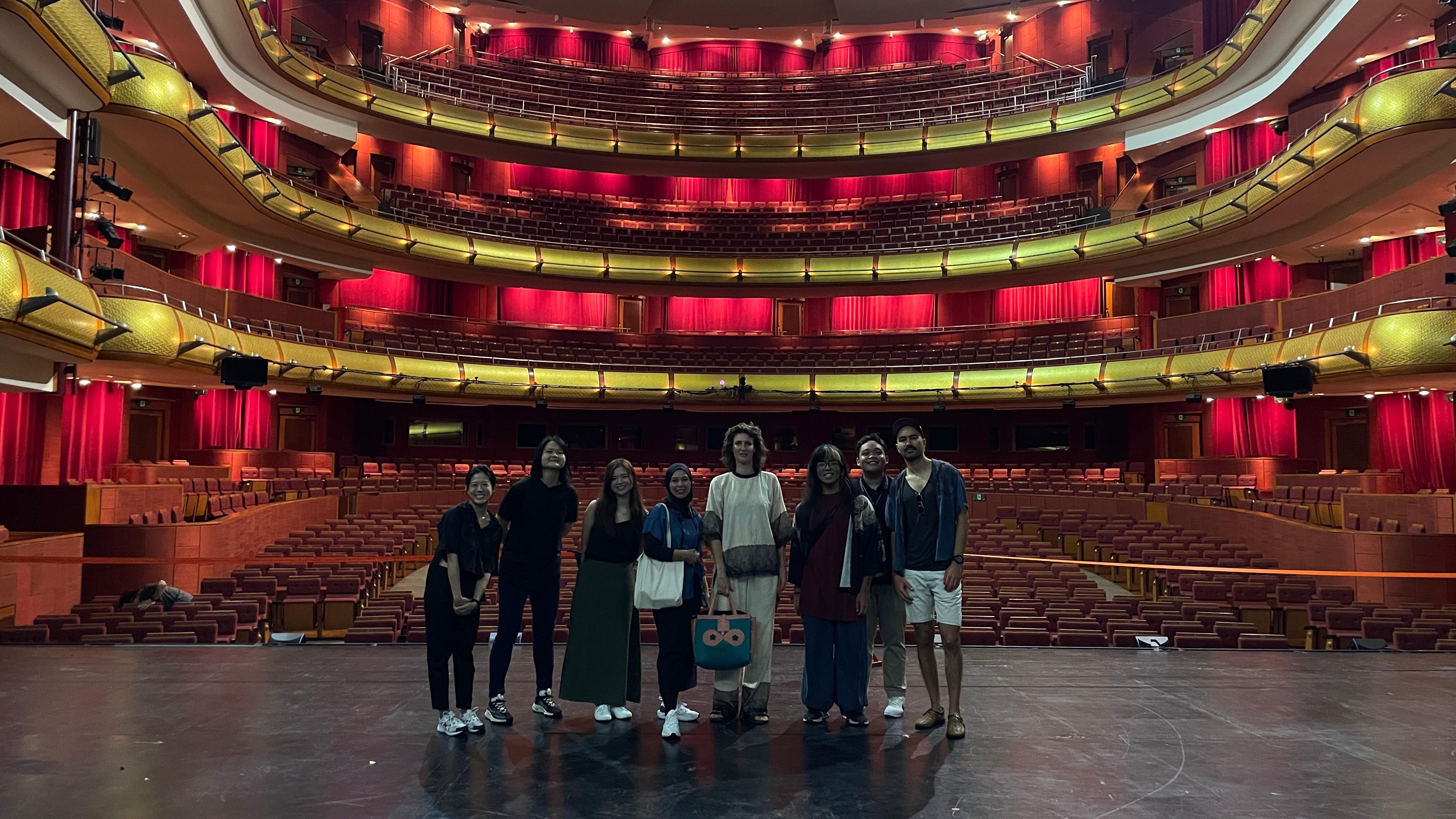
T O R S O
by Ayu Permata Dance Project
Photo by Andri Wijaya
Choreographer & Dancer: Ayu Permata Sari
Composer: Edythia Rio W
Visual Artist: Gelar Soemantri
Dramaturg: Nia Agustina
Producer: Nabilla Kurnia Adzan
Synopsis:
Eng: This work explores how culture builds and controls body expression.
Through traditional dance as a starting point,
Torso becomes a space for reflection and dialogue to question who
owns the body and how women can have power over their own bodies.
IDN : Karya ini membedah bagaimana konstruksi budaya turut membentuk ekspresi tubuh.
Melalui pintu masuk tari tradisi yang familiar, Torso akan hadir sebagai medium dialog
reflektif untuk mempertanyakan kepemilikan dan kedaulatan tubuh perempuan.
The work Torso is a production of Ayu Permata Dance Project,
supported by Yayasan Kelola through the Innovative Arts Grant program in 2025.
Karya Torso merupakan produksi Ayu Permata Dance Project yang didukung oleh Yayasan Kelola
melalui program Hibah Seni Karya Inovatif tahun 2025.
Previous Performances – Torso
1. Kotabumi, Lampung Utara – Studio APDP
June 18, 2025
Supported by Yayasan Kelola and the Indonesian Government. Promotional link of the production
2. Bandar Lampung – Dewan Kesenian Lampung
June 21, 2025
Supported by Yayasan Kelola and the Indonesian Government. Promotional link of the production
3. Jakarta – Plaza Teater, Taman Ismail Marzuki
July 20, 2025
Presented at Benang Merah Festival 2025. Promotional link of the production
4. Singaraja, Bali – Museum Buleleng
July 25, 2025
Presented at Singaraja Literary Festival 2025. Promotional link of the production
5. Gwangju, South Korea – ACC (Asia Culture Center), Big Door Stage Theater 2
October 3, 2025
Selected for the international program Asian New Wave 2025. Promotional link of the production
Karya Torso dalam Perspektif Media: Kumpulan Artikel
The Work Torso in Media Perspective: Collected Articles:
1. Lampung Insider_ Isbedy Stiawan ZS ( 22 Juni 2025)
2. Tatkala_Jaswanto (2 Agustus 2025)
3. Tatkala_Angelique Maria Cuaca (16 Agustus 2025)
Narrative:
This work begins from my awareness about the limited movement of the torso in traditional Lampung
Pepadun dances, especially in female dances like Cangget Putri and Sigeh Penguten.
These dances became the base of my dance practice. I started to question why the torso
is not explored in these traditional dances. I found that tradition and religion play important roles.
In adat (custom), dropping accessories during a dance can lead to social punishment.
Movements like the torso are seen as too strong or too sensual. At the same time,
religion—especially Islam—asks women to control their body, to not move too expressively.
The female body is seen as something that must be polite, soft, and controlled, not free to express
From my research, I also reflect on the story of my mother, who was taken (sebambangan)
to marry my father—something accepted by tradition, but full of symbolic violence.
It shows how adat controls women’s choices and bodies. In traditional events, only
unmarried women are allowed to dance. Married women must stop, while men can continue.
I use this dance work to question that. The circle on stage made of white starch flour shows
the border and control around women’s bodies. The video art and sound help me to explore my
torso and my voice. I do not represent all Lampung women. I speak from my own experience,
shaped by adat and society. I believe women’s bodies are not just objects of beauty or morality,
but have their own meaning, power, and story to tell.
_________


Contact
Email: ayupermatadancecompany@gmail.com
Phone: +62 819 9702 7702
Address: Jl. Pembangunan No. 19, Kota Alam, Kotabumi Selatan, Lampung Utara, Lampung, Indonesia 34519